Choosing between lithium and alkaline batteries has become one of the most common questions for tech users and professionals. As portable electronics evolve, battery technology continues to shape our energy efficiency and sustainability goals. This article provides a full lithium vs alkaline battery comparison covering voltage, longevity, performance, cost-effectiveness, and environmental friendliness.
1. Understanding Lithium and Alkaline Battery Chemistry
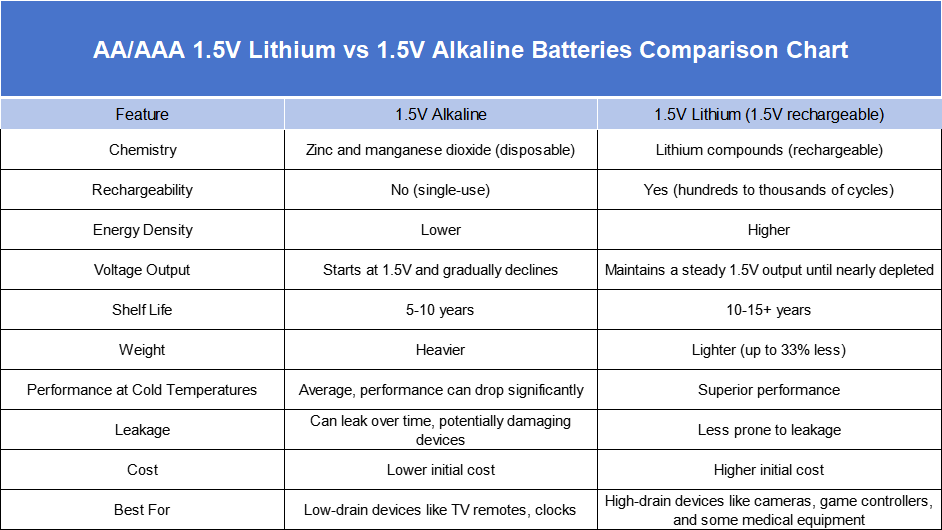
Alkaline batteries are built using zinc anodes and manganese dioxide cathodes with an alkaline electrolyte. They are usually 1.5V disposable batteries found in everyday devices such as clocks, remote controls, and toys. On the other hand, lithium batteries utilize lithium compounds as the cathode material, providing higher energy density, lighter weight, and improved performance in both high-drain and extreme temperature environments.
2. Voltage and Capacity Comparison
The nominal voltage of an alkaline AA battery is 1.5V, while a lithium-ion cell typically outputs 3.2V–3.7V per cell. Some modern lithium AA rechargeable models are regulated to provide 1.5V constant output for compatibility with traditional devices. Because lithium batteries have a flatter discharge curve, they maintain stable power output almost until depletion — a decisive advantage over alkalines, which gradually lose voltage over time.
3. Lifespan and Performance
A major advantage of lithium batteries is their cycle life. Rechargeable lithium-ion batteries can last between 1,000 and 4,000 cycles, while primary lithium batteries (non-rechargeable) offer 5–10 times the lifespan of alkaline batteries in single-use applications. They perform exceptionally well in cold temperatures down to −40°C, making them ideal for outdoor or professional devices such as weather sensors, cameras, and GPS trackers. In contrast, alkaline batteries lose significant capacity below 0°C and are best suited for low-drain indoor devices.
4. Cost Efficiency: Short Term vs Long Term
While alkaline batteries are initially cheaper — roughly $0.50 to $1 per cell — their disposable nature makes them more expensive over time. Lithium-AA batteries, costing about $5–$15 each, save money in the long run thanks to their rechargeable design and stable voltage retention. Over ten years, the cost per use of lithium batteries can be several times lower than that of disposable alkalines, especially in high-drain or daily-use devices.
5. Environmental Impact and Sustainability
Battery sustainability has become a defining metric for eco-conscious consumers. Alkaline batteries are single-use, leading to millions of tons of waste annually, while lithium batteries are recyclable and reusable. More than 90% of lithium battery materials can be recovered through recycling, substantially reducing resource mining and landfill waste. Therefore, lithium batteries not only provide superior performance but also contribute to lower carbon emissions and long-term environmental protection.
6. When to Choose Lithium or Alkaline Batteries
Choose Alkaline Batteries – For low-drain or occasional-use devices such as clocks, television remotes, and smoke detectors. Ideal for short-term use and budget-conscious situations.
Choose Lithium Batteries – For high-drain, outdoor, or temperature-sensitive devices like digital cameras, weather stations, power tools, and medical equipment.
In cold environments or high-performance electronics, lithium batteries outperform alkaline batteries in every measurable way. Meanwhile, alkaline batteries still hold value in cost-sensitive, low-energy applications where longevity and rechargeable capability are less critical.
7. Final Verdict: Which Battery Is Right for You?
After analyzing performance, lifespan, cost, and sustainability, it’s clear that lithium batteries are the superior choice for most modern devices. Their reliability, energy efficiency, and eco-friendly recyclability make them a long-term investment. Alkaline batteries remain a good short-term or backup option, but for users seeking longevity, safety, and power consistency, lithium technology is the future of portable energy.
Ultimately, when comparing lithium vs alkaline batteries, the right decision depends on your device’s power demands and operating environment — but the growing shift toward rechargeable lithium batteries is an undeniable trend in the energy technology world.


